


Dill is a herb that I never used to use in the UK. I didn’t know much about it and certainly didn’t cook many dishes that required it. If it was used it was in dried form in a small glass or plastic container. To be quite honest I wasn’t impressed with it at all.
Then Bulgaria was visited, they use Dill (called koper) in many dishes, not dried but unused fresh dill stored in freezers. I can’t remember many dishes without dill being included and of course everyone grows it here. When it goes to seed, which is around now, the dried plant with seeds still intact are used in the bottling of many vegetables such as gherkins, peppers, etc. There is now waste form the herb.
A potato dish was made two days ago was made with dill, which had such a profound effect on the flavour in combination that we just couldn’t stop eating once started. Simplicity with dill as the sole flavour to the potatoes was the key here. I will take you through the stages.
The potatoes gathered were still in the ground and the dill still on the plant growing in the garden only 30 minutes before starting this recipe. But as long as both are fresh it should still work for you.
A potato dish was made two days ago was made with dill, which had such a profound effect on the flavour in combination that we just couldn’t stop eating once started. Simplicity with dill as the sole flavour to the potatoes was the key here. I will take you through the stages.
The potatoes gathered were still in the ground and the dill still on the plant growing in the garden only 30 minutes before starting this recipe. But as long as both are fresh it should still work for you.
Recipe For Dill Potatoes
Serves up to 6 people
40 minutes to cook
Ingredients:
1 kg new white potatoes
1 handful of fresh green dill chopped finely
100 g margarine
Salt and freshly ground black pepper
Method:
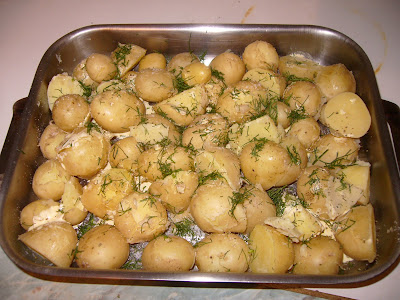 Wash the potatoes and cut into roughly 2 cm sq pieces.
- Place in a pan of cold water and boil for 20 minutes or until just beginning to go soft. Whilst this is happening preheat the oven to 220 C.
- Drain the potatoes and place in an oven tray. Spread the margarine over the hot potatoes so it covers them evenly.
- Then sprinkle the chopped dill over the potatoes and season with salt and pepper.
- Place the tray into the hot oven and bake for 15 minutes.
- The dish is ready for serving.

The dill potatoes make just as good meal when cold or can be reheated with a little more margarine.
![Reblog this post [with Zemanta]](https://lh3.googleusercontent.com/blogger_img_proxy/AEn0k_va2NvRlAleJaG1NU49VJG9-UojJR_RTB7lc90va7zep6Q5WboN-OVrmTqZWQI2xlbt5k0mu-31qxK_JEcC4vXep6Oi3yxANH6C68A_t5hKJhjj_hwp3surImwrJsVE5C17MXXLUxOIZny2sG5vA2XF=s0-d)


![Reblog this post [with Zemanta]](https://lh3.googleusercontent.com/blogger_img_proxy/AEn0k_snDqlXYKzbNETSmprg4k6I6U29vDBtX68R1o6ZxDdpdtCEVuQ0CrwMYBic7-JWIWlPCmCpqnmxyJqGjWKpUn-pFkEJydVTmSNAQs46Hqg2dbh72asv4wRZc11qjBMe-hzylRy8BDssO6WmcwwZTDEm=s0-d)