I am now back living in Bulgaria an oasis for herbs. The passion for using and finding out about new herbs and remedies for illnesses has come back s you cannot ignore what is around you here.
Once I have unpacked my bags and settled in my home I will add to the posts already published on the site.

Clixsense

Showing posts with label herb. Show all posts
Showing posts with label herb. Show all posts
Wednesday, 26 July 2017


Wednesday, 28 October 2009
It's Easy to Grow Herbs in Pots

An Interesting article on mint, one of the most used herbs worldwide. Not need to buy mint ever again if you take someof the tips given here.
Herbs can also be grown indoors in pots or containers. They can also be grown in window boxes or hanging baskets. Growing herbs in pots is not anymore difficult then growing herbs in an outdoor garden. Indoor herb gardens need the same growing requirements that garden herbs need.
All plants need three main things in order to grow successfully; sunlight, soil and water. Herbs are no exception. Sunlight is key to growing any type of plant including herbs whether they are grown indoors or in a garden.
You should place herbs grown in a kitchen or other room in a south or west facing window to get the best kind of sunlight. Different types of herbs have different light requirements but, for the most part, all need a sunny location.
Some home herb growers supplement the light source with "grow lamps" or fluorescent lamps. Herbs also need a well drained, not too rich soil to grow in. Add two parts of sterilized potting soil with one part coarse sand or perlite for herbs that are grown in containers.
You will also need about an inch of gravel at the bottom of each pot to ensure that the plant has good drainage. Herb grown in pots indoors can also be supplemented with one teaspoon of lime per 5-inch pot to ensure that the soil is sweet enough for the herbs.
Herbs grown in pots also need water. Misting the plants and moistening the pebbles will help to keep the herbs within humid conditions. Since they are being grown in containers they do need to have more water then herbs that are grown in a garden but, you should avoid getting the roots of the herbs drenched or soggy.
An advantage to growing herbs in a container is that you have the freedom to move them about as you please. Annual herbs can spend all of their time indoors but, perennial herbs do better if they were to be placed outside during the summer.
Although all herbs should be brought inside before the first frost in order to avoid the loss of foliage. This rule is over looked when it comes to mint, chives, and tarragon. These types of herbs will go into a rest period then form firmer and fresher growth after it is introduced to a light frost.
All herbs can be grown in containers but some herbs do better then others. Mint is an herb that needs to be contained or it will take over the garden. Over all it is fairly easy to maintain an indoor herb garden. It keeps the herbs handy and within reach anytime you need them for cooking.
With these tips listed above, you will be able to care for your herbs and ensure a healthy plant. You should also include periodic light feeding and yearly repotting for optimum health of the herbs. You will also have to remember to replant annuals each year and move perennials outdoors when needed.
Plus, use your herbs as much as you want as well as harvest them occasionally. It is no secret that pruning plants encourages new growth. This rule also applies to herbs. So use them in your recipes, store them and give them away to friends.
All plants need three main things in order to grow successfully; sunlight, soil and water. Herbs are no exception. Sunlight is key to growing any type of plant including herbs whether they are grown indoors or in a garden.
You should place herbs grown in a kitchen or other room in a south or west facing window to get the best kind of sunlight. Different types of herbs have different light requirements but, for the most part, all need a sunny location.
Some home herb growers supplement the light source with "grow lamps" or fluorescent lamps. Herbs also need a well drained, not too rich soil to grow in. Add two parts of sterilized potting soil with one part coarse sand or perlite for herbs that are grown in containers.
You will also need about an inch of gravel at the bottom of each pot to ensure that the plant has good drainage. Herb grown in pots indoors can also be supplemented with one teaspoon of lime per 5-inch pot to ensure that the soil is sweet enough for the herbs.
Herbs grown in pots also need water. Misting the plants and moistening the pebbles will help to keep the herbs within humid conditions. Since they are being grown in containers they do need to have more water then herbs that are grown in a garden but, you should avoid getting the roots of the herbs drenched or soggy.
An advantage to growing herbs in a container is that you have the freedom to move them about as you please. Annual herbs can spend all of their time indoors but, perennial herbs do better if they were to be placed outside during the summer.
Although all herbs should be brought inside before the first frost in order to avoid the loss of foliage. This rule is over looked when it comes to mint, chives, and tarragon. These types of herbs will go into a rest period then form firmer and fresher growth after it is introduced to a light frost.
All herbs can be grown in containers but some herbs do better then others. Mint is an herb that needs to be contained or it will take over the garden. Over all it is fairly easy to maintain an indoor herb garden. It keeps the herbs handy and within reach anytime you need them for cooking.
With these tips listed above, you will be able to care for your herbs and ensure a healthy plant. You should also include periodic light feeding and yearly repotting for optimum health of the herbs. You will also have to remember to replant annuals each year and move perennials outdoors when needed.
Plus, use your herbs as much as you want as well as harvest them occasionally. It is no secret that pruning plants encourages new growth. This rule also applies to herbs. So use them in your recipes, store them and give them away to friends.
Author: Mary Eule Scarborough
Mary E. Eule, BA, MS is a professional writer and researcher who been an avid container herb gardener for over 25 years. She is also the author of the comprehensive, step-by-step guide, "The Down to Earth Guide to Easy Container Herb Gardening," Visit her website: http://ContainerHerbGardening.com to purchase her e-book, download her free herb e-course or to get additional tips and articles on growing herbs in pots .
Mary E. Eule, BA, MS is a professional writer and researcher who been an avid container herb gardener for over 25 years. She is also the author of the comprehensive, step-by-step guide, "The Down to Earth Guide to Easy Container Herb Gardening," Visit her website: http://ContainerHerbGardening.com to purchase her e-book, download her free herb e-course or to get additional tips and articles on growing herbs in pots .
Article Source: http://www.articlealley.com/article_1016669_27.html
![Reblog this post [with Zemanta]](https://lh3.googleusercontent.com/blogger_img_proxy/AEn0k_vJNZa73KjKd2_j3vceKb4cg3ScOk0PUI6t_I9C0relRN1JLCl2SxAIZYL92i9z34yMs1_JYUFiZN13-Z0AeO08_4wxPCXZxBkB2EK4PFfG1kjf_kfBX5tTosVQZN_XAFF2sT4v-Gye37WL8LOxrEd-=s0-d)
Monday, 31 August 2009
A Great Natural Medicine Site Found
 Herbs are natural source of medicine and the field of knowledge in this genre is endless. In some people’s eyes they wouldn’t use anything else other then herbs for remedies and cures, but where do you get advice on this massive subject? Where can you get feedback form people who have used herbs as medicine and have experience on the methods and effect they have had?
 I have found a great site that is basically dedicated to herb talk and natural medicines. With a health forum which is a Google PR5 which proves it’s popularity and other sections on nutrition and recipes based on natural herbs and other foods there is a wealth of sections that can be clicked into for advice from others who have the same interest. The site has a wide and active audience and many of the topics will have very useful information on many sources of medicine that people can openly talk about. It is a site where you can register for free and it is quick and easy, then you can ask questions you may have or answer questions given by other members.
I just thought it would be a useful resource for many people reading my blog.
I just thought it would be a useful resource for many people reading my blog.
![Reblog this post [with Zemanta]](https://lh3.googleusercontent.com/blogger_img_proxy/AEn0k_vRD0UdvI-q7MmbJsaNa0dxx3QaZ5-hyXScE8fkHhJfvcpL5zydH9KNMDEFJj7X6jNH2nBlPXFpyonLBPoMbc1R258LB2HiF1tTAD6L12gVhUT-gj9R7mFsmiGiNt7ZFFqoU5ZQPjRlVqYVxfJnDLk=s0-d)
Monday, 6 July 2009
Coriander - Grown But Not Eaten In Bulgaria

Coriander is a fantastic herb for its strong flavour and is produced as a major export food in Bulgaria. It is very rare indeed for Bulgarians who produce so much of it to use it in their National dishes – I really don’t know why?
This aside coriander or cilantro is an annual herb. It is native to south western Asia and west to North Africa. It looks a bit like parsley with its It is a soft, hairless leave growing up to 50 cm in height. The flowers form small umbels coloured white or light pink, asymmetrical, with the petals pointing away from the centre of the umbel longer (5-6 mm) than those pointing towards it (only 1-3 mm long). The seeds, another fantastic food ingredient is round and ranging from 3-5 mm in diameter.
Used sparingly in salads coriander leave ad a ‘zing’ to the taste. Many Asian dishes use coriander alongside many other herbs and spices. The herb is never overpowered in taste, even with the addition of chillies. The coriander seeds give an even stronger flavour and are often lightly dry roasted before being ground or crushed to bring out an even more intense flavour.
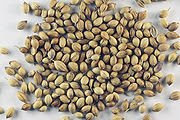 Coriander is easy to grow even in the UK if in a sunny sheltered position and of course in pots inside the house on a sunny window ledge would being good results. You can use the seeds from the supermarket or local Asian grocer to plant. You will find that if you do go to your local Asian grocer the leaves and the seeds will be much cheaper and fresher that supermarket produce.
I have introduced coriander to my Bulgarian family and friends in salads and other meat stew dishes, but although they like it, they will not use it and revert back to traditional ingredients where coriander is excluded. The only use they have in Bulgaria is to add coriander to the distilling of rakia – this is done most effectively and the resulting rakia takes on the flavour very successfully.
Elsewhere coriander seeds are used in other alcoholic beverages such as brewing certain styles of beer, particularly some Belgium.
Coriander has many uses in all types of food, but you must remember that always buy and store the seeds whole as ground coriander loses its flavour very quickly.
Used sparingly in salads coriander leave ad a ‘zing’ to the taste. Many Asian dishes use coriander alongside many other herbs and spices. The herb is never overpowered in taste, even with the addition of chillies. The coriander seeds give an even stronger flavour and are often lightly dry roasted before being ground or crushed to bring out an even more intense flavour.
 Coriander is easy to grow even in the UK if in a sunny sheltered position and of course in pots inside the house on a sunny window ledge would being good results. You can use the seeds from the supermarket or local Asian grocer to plant. You will find that if you do go to your local Asian grocer the leaves and the seeds will be much cheaper and fresher that supermarket produce.
I have introduced coriander to my Bulgarian family and friends in salads and other meat stew dishes, but although they like it, they will not use it and revert back to traditional ingredients where coriander is excluded. The only use they have in Bulgaria is to add coriander to the distilling of rakia – this is done most effectively and the resulting rakia takes on the flavour very successfully.
Elsewhere coriander seeds are used in other alcoholic beverages such as brewing certain styles of beer, particularly some Belgium.
Coriander has many uses in all types of food, but you must remember that always buy and store the seeds whole as ground coriander loses its flavour very quickly.
![Reblog this post [with Zemanta]](https://lh3.googleusercontent.com/blogger_img_proxy/AEn0k_sBhauEzGDLnjFBnHMktYZFIKj5MX1CN2rlR0wYia4F5oyC77ggg6LFSQcnBDizwqTdtdPuJ1vzHvdnc5Hw5ESxD1wXB-msHtUmVi5ytS9DxydnY99lhtmWCyvtTLX2Akky7l15NfEz-Z1RO-Ewam4=s0-d)
Tuesday, 30 June 2009
Basil - An Answer To Flies In The Home

The use of herbs as a natural answer to many problems never ceases to amaze me. Already this summer flied have been a major problem, they sneak into the home and cause havoc and I just can't face the thought of using poison based fly spray to eliminate the problem.
Recently I had a Greek friend staying with me and he suggested I grow basil in containers and keep them in the house. This will keep the filed at bay he assured me as this is what he does in Greece where flies are even more of a problem.
So a few basil transplants from the garden and into some yoghurt containers and I have some indoor basil that sit proudly on my kitchen and dining room window sill. Not only that but the smell of basil is a great to have around the house as well. By the way, Don’t for one moment think that I would go to a garden centre and buy herbs when you can do this for nothing!
All the basil in place and the test was on. There were a couple of times when flies entered the rooms, but they darted out as fast as they came in. It worked a treat. Why didn’t I know about this before with all the suffering I had to go through?
It seems there is a herb answer to most things and now you know.
So a few basil transplants from the garden and into some yoghurt containers and I have some indoor basil that sit proudly on my kitchen and dining room window sill. Not only that but the smell of basil is a great to have around the house as well. By the way, Don’t for one moment think that I would go to a garden centre and buy herbs when you can do this for nothing!
All the basil in place and the test was on. There were a couple of times when flies entered the rooms, but they darted out as fast as they came in. It worked a treat. Why didn’t I know about this before with all the suffering I had to go through?
It seems there is a herb answer to most things and now you know.
Image via Wikipedia
![Reblog this post [with Zemanta]](https://lh3.googleusercontent.com/blogger_img_proxy/AEn0k_v70gg3aI0tFHLqMgL3JtohPsUzAze_wsRo-BeBLQvHEYYgFf0fmtSfBD3MM9gb8oRND4OSTpGFQMoomsj0jxdYLYjiEtGweAnWRUsW5kGq5OgmLVh961Qj5zT5qeA7sclWZgWh6hSmYc0drIU4RNAk=s0-d)
Tuesday, 9 June 2009
Pimpinella Anisum - Or Bettter Known As Anise
![Star [Anise] Burst](https://lh3.googleusercontent.com/blogger_img_proxy/AEn0k_uUjY400O9OxdMc2bGcCPJWI6BuzBaaEVO0eR4b9opVQeR8nyY0xLIGcmeplEy67H_UXIa4ijC7phQPMo3sSi5r1SMHR9_aFTMDSkjckXc35pqPDDlHjAjmnlXy4OV2NA=s0-d)
Pimpinella anisum or its more common name anise grows in the warmer parts of the world. It probably originates from the Mediterranean area and is a grass-like herb that grows to 60 cm in height and blossoms with a 5 part cluster of white flowers between May and June.
The fruits are harvested in July and August just before full maturity to avoid the fruit dropping. The aniseed-flavoured fruit has distinctive odour and sweet taste. It is normally packaged in a hemp or chetirisloyni paper bags to prevent moisture seeping in. therefore should be stored in dry and ventilated areas.
the herb is used mainly for coughs and associated ailments such as inflammation of the bronchi, laryngitis and angina. Add to this a remedy for pains in the stomach and intestines, gastric mucosal inflammation, colic, flatulence, sand and stones kidneys and bladder problems. Lastly is is known to increase milk in breastfeeding.
 In Bulgarian folk medicine is used when thick, insomnia, headache, lack of regulation and painful menstruation, and other hiccups.
You can add 1 teaspoon beaten plodcheta and leave to soak for 1 hour in half a litre hot water, then drink 1 glass of this before meals 4 times a day. Or you can use essential oil with 1-2 drops that can be taken on a sugar lump.
I will be sure to keep an eye out for this in Bulgaria, sounds a pretty useful herb to have n stock although I don’t think it would survive a cold winter here is grown, but maybe as an annual is the raw seeds can be sourced. Being grass like probably would lend itself to being grown in containers to restrict root invasion then perhaps could be sheltered during winter.
the herb is used mainly for coughs and associated ailments such as inflammation of the bronchi, laryngitis and angina. Add to this a remedy for pains in the stomach and intestines, gastric mucosal inflammation, colic, flatulence, sand and stones kidneys and bladder problems. Lastly is is known to increase milk in breastfeeding.
 In Bulgarian folk medicine is used when thick, insomnia, headache, lack of regulation and painful menstruation, and other hiccups.
You can add 1 teaspoon beaten plodcheta and leave to soak for 1 hour in half a litre hot water, then drink 1 glass of this before meals 4 times a day. Or you can use essential oil with 1-2 drops that can be taken on a sugar lump.
I will be sure to keep an eye out for this in Bulgaria, sounds a pretty useful herb to have n stock although I don’t think it would survive a cold winter here is grown, but maybe as an annual is the raw seeds can be sourced. Being grass like probably would lend itself to being grown in containers to restrict root invasion then perhaps could be sheltered during winter.
![Reblog this post [with Zemanta]](https://lh3.googleusercontent.com/blogger_img_proxy/AEn0k_vsyibskxjsPVcfd_X3jp7klQhgyRzfIYEOVpSTnl5iasMkdE9bgKcTnLgqvCMeiNuKFj8JrBr12BNEdt_06bnMSrvVcwbplHzhyU_4ddkskip4wsvJX7NCCIKhLV84lOnUxB52VwMiIcnT60vPUlc=s0-d)
Monday, 4 May 2009
Pokeweed - A Toxic Herb
 I'd never heard of pokeweed before so looking up about this herb is new to me. It will certainly stick in my mind now that I know about its dangerous toxins and also the benefits it gives in medical remedies. Certain a gamble to the novice, perhaps it should be called pokerweed.
Pokeweed is also known as poke, poke bush, pokeberry, pokeroot, polk salad, polk sallet, inkberry and ombú. There is quite a selection of names to choose from depending on where you come from. They are perennial plants and originate from North America, South America, East Asia and New Zealand. Pokeweed are poisonous to mammals although the berries are eaten by birds who are not affected by the toxin as the seeds have a very hard outer shells and remain sealed throughout their digestive process.
Pokeweeds grows up to 10 ft. tall with single alternate leaves which are pointed at the end and has crinkled edges. The stems are usually pink or red with greenish-white flowers that come in long groups at the top of the stems. These flowers go on to develop into dark purple berries.
Boiling young pokeweed leaves three times will reduce the toxins producing a poke salad this is and is occasionally available in shops. There is an official campaign against eating pokeweed even after triple boiling, as some toxin may still remain. Poke salad has been a staple of southern USA diet even tough discouraged by the medical profession. There are poke salad festivals held annually in this region.
 Pokeweed has been used as remedies to treat many ailments such as acne, tonsillitis/swollen glands and weight loss. Grated pokeroot was used as a poultice to treat inflammations and rashes of the breast. There is ongoing research are investigating the use in treating Aids and cancer patients. It can relieve the pain of arthritis add pokeberry juice to other juices for jelly.
Pokeweed berries can be made into a red ink or dye. This was used by Native American Indians to paint their horses. The United States Declaration of Independence was actually written in fermented pokeberry juice. Soaking fabrics in fermenting berries in hollowed-out pumpkins can make a brown dye.
Some pokeweeds make attractive ornamental plants and the impressive display of berries have been selected and cultivated to enhance the size.
To those who have not been properly trained in its use, pokeweed should be considered dangerous and possibly deadly. So beware of the dangers.
![Reblog this post [with Zemanta]](https://lh3.googleusercontent.com/blogger_img_proxy/AEn0k_uVBiqoVkW8yuXnd0sFzM1zRWtF8fs9gpLgBrR5EzhbSkT-qQIyKsyekNpn52hP5ihqWJM3522kUGWiwuG7v-Ch62osnszB873Gensz8pEGl8aJKpQwRITi3OwKCyqBpMPIAMGdyD3v5NXCHwtMQbA=s0-d)
Wednesday, 18 March 2009
Herbs and Witch Doctors

Herbal history shows evidence that medicine men, also know as witch doctors were responsible for health of their tribes. They gathered herbs and even went about performing minor surgical treatment to patients. their job was to provide medical advice and give treatments that was tied up with supernatural elements. They used charms, spells to ward off evil spirits.
The most well-known medicine men and witch doctors are from the American Native Indian societies, mainly because of the American film industry and westerns, therefore research would have been made for this. Medicine men perform ceremonies over the patient with family and friends in attendance. Herbal and other components that are called magic formulas are used along with prayers and a constant rhythm through drumming.
There was an overriding belief that these medicine men were able to contact the gods and with the aid of herbs and supernatural powers the patient would be cured, effectively ridding them of the evil spirits. They had an escape clause though. It the ceremony didn't work it was explained that the evil powers were too strong. A medicine man would have great respect, just like doctor of today in the community. However medicine men would not have had any formal training in medicine and procedures that were learnt were passed down by word of mouth.
Although many herbs would have been used and many would have worked in their own circles, the procedures were more of a psychological practice. We used many of these herbs in the same way today with our scientific knowledge base behind it and leave the psychology to the psychologists. The science has taken away the respect for the medicine men many years ago. The pillar of their society and glamour of their practices has faded, but they have left a legacy of herbal practices that do go on.
The most well-known medicine men and witch doctors are from the American Native Indian societies, mainly because of the American film industry and westerns, therefore research would have been made for this. Medicine men perform ceremonies over the patient with family and friends in attendance. Herbal and other components that are called magic formulas are used along with prayers and a constant rhythm through drumming.
There was an overriding belief that these medicine men were able to contact the gods and with the aid of herbs and supernatural powers the patient would be cured, effectively ridding them of the evil spirits. They had an escape clause though. It the ceremony didn't work it was explained that the evil powers were too strong. A medicine man would have great respect, just like doctor of today in the community. However medicine men would not have had any formal training in medicine and procedures that were learnt were passed down by word of mouth.
Although many herbs would have been used and many would have worked in their own circles, the procedures were more of a psychological practice. We used many of these herbs in the same way today with our scientific knowledge base behind it and leave the psychology to the psychologists. The science has taken away the respect for the medicine men many years ago. The pillar of their society and glamour of their practices has faded, but they have left a legacy of herbal practices that do go on.
![Reblog this post [with Zemanta]](https://lh3.googleusercontent.com/blogger_img_proxy/AEn0k_tCAc2Y9Hh50Pueeib8k2hso15plFk1YmnDKRp3Qw84Y6mHrn7nkbbWYqCzoZPuMXkJAyCi7hY3zgopOjSAGmICpSVsl6RHT7kLCPG8DbQ3-_dEwMd3Rr4R18YG8uChcjouyZRYh8-I103ecwRPedKO=s0-d)
Wednesday, 4 March 2009
Clematis Beautiful with Major Health Benefits
 I am a great fan of the Clematis. In England it was commonplace in my garden often climbing up fruit trees as it is a vigorous climber with the most of attractive flowers. There are many varieties from the shrubby to the herbaceous perennial. Some Clematis vines can grow as long as 100 feet. However there is more than meets the eye to this beautiful climber.
They grow happily in temperate regions and also in mountains in the tropics. They do well on limestone and other basic soils and in the warmer climates some species are actually evergreen. Although known as Clematis in English it is also known as Traveller's Joy, Old Man's Beard, Leather Flower, Vase Vine or Virgin's Bower.
In America the Clematis was called the Pepper Vine by early pioneers travelling west and used it as a pepper substitute to spice up food. Black pepper was expensive and rare during that time. From the Clematis the essential oils irritate the skin and can cause internal bleeding of the digestive tract if ingested in large amounts. From this the plants could be described as toxic. But the Native Americans used small amounts of clematis as treatment for migraine headaches, other nervous disorders and for the treatment of skin infections.
 The root of the Clematis is used China to treat the pains and stiffness from rheumatism. The treatment is also used for arthritic aches, spasms, swelling, numbness, lower back spasms and joint pains caused from damp conditions. It also gives relief to many suffering from restricted mobility
Summing up the benefits of Clematis are wide ranging. It acts a pain reliever, including headaches, varicose veins, syphilis, gout, rheumatism, bone disorders and chronic skin condition and also works as a diuretic. Added to this it is an anti-rheumatic, analgesic, anti-diuretic and antibacterial, with the root of the Clematis also known to reduce blood sugar.
With all these medical benefits attributed to this amazingly pretty herb found in many domestic gardens it is perhaps underrated as a herb.
Monday, 16 February 2009
Ginger - It's Uses and Grow Your Own
 Ginger is a herb that is well know throughout the world, but not much is known about it and what benefits it possesses? Did you know you can grow your own in your kitchen?
Young ginger is juicy with a mild taste. They can be pickled in vinegar or even sherry and eaten as a snack. Most ginger is used as an ingredient in many dishes. Ginger can also be used in boiling water to make ginger tea and accompanied by honey to sweeten it.
 Older ginger is fibrous and lack moisture. Old ginger roots are very powerful and are used as a spice in Indian and Chinese dishes for flavour. The dishes that suit this are seafood or goat and many vegetarian recipes. There is the powdered version of ginger root, which is used in gingerbread and many other bread and cake dishes.
 Ginger is well suited contender for making candy with many carbonated, non-alcoholic beverages using the unique ginger flavour and of course the famous ginger beer which is popular worldwide containing a minimal amount of alcohol as the original recipe involves some fermentation.
Fresh ginger should always be peeled before using in cooking. when storing for up to three months in a freezer if wrapped in a towel and put in a plastic bag.
Ginger is a very useful herb in medical uses. It used to be called 'Jamaica ginger' used as a stimulant with additional use for treating dyspepsia and colic. The taste of conventional medicines where often horrible and ginger was used to disguise this. Moving on, ginger also decreases joint pain from arthritis with the properties believed to thin the blood blood and lower cholesterol therefore effective for treating heart disease.
Ginger also treats Diarrhea and Nausea including seasickness, morning sickness and is especially effective if you have a hangover. Ginger eaten on an empty stomach is an effective cure for congestion, coughs and colds. And for settling stomachs ginger ale or ginger beer have been used for centuries. Ginger water was used to avoid getting heat cramps in America. Ginger has also been historically used to treat inflammation. More recently, treatment with ginger on rats indicate that the herb may be useful for treating diabetes.
 You can buy ginger in most big supermarkets in all forms, fresh, dried and powdered. But did you know that you can grow your own? With spring coming up buy some fresh ginger in the shops. Make sure they have 'fingers' the show buds and cut off at least 5cm from the bud. Bury it bud facing upwards in a around 20cm depth of compost in a pot mixed with a little sand. Keep in a warm place and make sure it stays moist. When it get larger transfer it to a bigger pot. It will need feeding with a general pot-plant feeder. When autumn arrived stop watering and let them dry out. When dry you will have you own home grown ginger that you can use in the kitchen.
Monday, 9 February 2009
Strewing Herbs - Old and New Fashioned
 Strewing is a funny word, would you have any idea what it means? If the phrase strewing herb was put to you, would that make it any clearer? It actually means specific herb plants that are thrown on the ground in homes and other buildings. These specific herb plants are fragrant in the main and also act as insecticides or disinfectants. Long gone are the days this happens now as it is replaced with canned sprays and scents systems on a hi tech nature.
Strewing herbs was widespread in England during the middle ages through to the 1700's. The reason for this was the early middle ages taking baths wasn't fashionable or practical and fell out of fashion in UK. To disguise the smelly Brits the use of fragrant herbs became the in thing. These herbs were scattered, or strewn in all rooms in homes. They lay on the floor and the scents were released when the floor was walked on as the reeds, rushes or straw presented a cushion and air was forced out so that pleasant odours would be released. This acted as a pest repellent as well as a perfumed environment.
 The strewing of herbs had no boundaries in social class as it was a free commodity, royalty and peasant alike used this system as a replacement of baths. There were many different herbs strewn and each one had its own unique property and purpose.
The church had a favourite strewing herb, namely rosemary, which may have something to do with the name.
To kill fleas and used to as a mattress and pillow stuffing alongside lavender. Lady's Bedstraw was used Pennyroyal also killed fleas. Still in the bedroom, there is Southernwood, which is also known as lad's love, it was understood that it was an aphrodisiac, hence used in bedrooms.
 Purely for their scent Sweet flag, various mint and thyme herbs, tansy, meadowsweet, chamomile and rose petal were popular herbs that were strewn liberally, with the Hyssop that apparently gave the impress of cleanliness.
It is a full circle that many of these original strewing herbs are still used in many homes now as insecticides and air-fresheners, but for most does not replace showers of baths.
Thursday, 29 January 2009
Frankincense the Medicinal Herb
 Frankincense or olibanum is well known for one good reason as it was one of the three gift to the baby Jesus brought from the Three Kings. It has been around well before this time. Frankincense was found in the tomb of the ancient Egyptian King Tutankhamen over 3300 years ago. Going back even further, frankincense has been traded on the Arabian Peninsula and in North Africa for more than 5000 years.
But hang on, frankincense? Surely you are mistaken, this blog is called Herbsways - Ways With Herbs and is all about herbs is it not? What is frankincense doing here then?
Let me formally explain:
Herbs have many uses including culinary, medicinal and even spiritual uses. With the medicinal or spiritual use is it considered the tag 'herbs' covers all parts of the plant including leaves, roots, flowers, seeds, resin, root bark, inner bark and berries. Taking this into account, frankincense technically a herb. This will surprise many, including myself.
Basically the herb frankincense is an aromatic resin manufactured from Boswellia tree. Frankincense is used in perfumery and aromatherapy. The olibanum essential oil is obtained by steam distillation of the dry resin. It is used as an incense and in many perfumes. It is not only in the perfume industry, but is also found in cosmetics and pharmaceuticals.
The Boswellia trees have to be about 8 to 10 years old to start producing the resin. They are harvested 2 to 3 times a year. Omani frankincense is said to be the best in the world with a close second from resins produced from the north coast of Somalia. Trees are extremely hardy sometimes seemingly growing directly out of solid rock.
 The method is for frankincense to be tapped by scraping the bark, which releases resins that will bleed and harden. There are many varieties of frankincense trees, each with its own unique type of resin. Soil and climate differences give even more varieties of the resin.
Christian and Islamic faiths have often used frankincense mixed with oils to anoint newborn infants and individuals considered to be moving into a new phase in their spiritual lives.
Frankincense is actually edible and often used in various traditional medicines in Asia for digestion and healthy skin. The edible frankincense must be pure for internal consumption, meaning it should be completely translucent, with no black or brown impurities. It is often light yellow with a hint of green. It is often chewed like gum, but is a bit stickier as it is a resin.
In India frankincense as medicine has been used for hundreds of years for treating arthritis. Burning frankincense repels mosquitoes and thus helps protect people and animals from mosquito-born illnesses.
 Incense preparations is effective for the treatment of Crohn's disease. The use of incense on the accompanying specimens of brain tumors and frankincense smoke as a psychoactive drug that relieves depression and anxiety in mice. Human patients that received the frankincense extract showed significant improvement in their arthritis.
It is a sign of greed in these parts that the trees have seen to now be in decline due to over-extraction of resin in recent years as this affect the germination of the seeds. This germination level has dropped from 80% to 16%. This will now lead to lower supplies and higher prices of course.
So, now you know more about frankincense when little Jimmy acts as one of the three Kings giving the herb, you can answer his questions on it. When I taught in Primary Schools in England, we used real frankincense and actually burned some in the classroom to give the children a 'taste' of the distinctive scent they give off. All these children will take this memory on to adulthood and never forget that moment whenever frankincense is mentioned.
Wednesday, 21 January 2009
Milk Thistle - Still Being Discovered
 Milk thistles are flowering plants coming from the daisy family. This particluar variety is native to the warmer regions of Europe including North Africa and the Middle East. It is used for health namely, liver diseases with more research being undertaken on further benefits for other ailments.
Тhe milk thistle herb is a tall, branched herb with alternate waxy leaves very much like other thistle varieties. including the national emblem of Scotland. There is a circular-shaped single flower that flowers the top of the stem, ranging from pink to purple in colour. The fruit that is produced from the milk thistle is black with a pappus.
The adverse effect of the medicinal use of milk thistle is loose stools, as silymarin has a laxative effect.
The milk thistle has beneficial effects on the liver, which greatly improve its function. It is used to treat liver cirrhosis, liver inflammation and gallbladder problems. Milk thistle produces silymarin, Silymarin has medical uses and has been used in many countries over the last 40 years. Recently milk thistle and a combination of other treatments were used to save a family from certain death from eating poisonous mushrooms.
There is still much research going on now about the dosages that is needed to have the full effect from the toxin-producing herb. It is only know right now that the doses have to be of significant volume and strength to perform well. This is still being tested and may be verified at a later date.
This is another example of another herb plants that are still not showing its full potential and understanding at this moment in time.
Wednesday, 7 January 2009
Lobelia - Pretty Useful
 Lobelia is a pretty annual or with some varieties a biennial herb that grows to a height of one metre. Lobelia is also known as the Indian tobacco. It has a hairy stem that branches out at the top. The colour is usually green with a hint of violet. The leaves are pale green or yellowish with a sharp taste and a slightly unpleasant smell. The flowers are coloured pale violet-blue on the outside and a pale yellow colour inside.
Lobelia is basically an expectorant, so it is commonly to use in cough syrups. It is also called asthma weed. It is prominent in remedies for treating asthma and bronchial disorders. The herb can be used externally in the form of a hot compress for sprains or swelling ailments.
Going back in time, it has a history of being used as herbal remedy for respiratory conditions such as asthma, bronchitis, pneumonia and coughs for centuries. As with many herbs the Native Americans Indians used to use countless herbs before commercialism took over. The Lobelia herb was smoked and was found very effective as a treatment for asthma.
 American doctors in the 19th century used lobelia to bring on vomiting, this was to remove toxins from the body. The nickname 'puke weed' came form this. Lobelia helps clear mucus from the respiratory system with some herbalists now incorporating lobelia to treat asthma.
A substance similar to nicotine is found in lobelia and it effects on the body just like nicotine. The central nerve system is stimulated from this. The substance, which is called ‘lobeline’ was previously used as a nicotine substitute in anti-smoking products and deterrents. This faded out as after a time, it was reported as an in affective method of reducing or stopping smoking in the latter part of the 20th century.
Lobelia is a potentially toxic herb, but safe to use in very small doses. In combination with other herbs that treat the respiratory system is considered safe.
 Finally, it is not recommended that you try to make you own herbal remedies from this herb, but take advice from professional herbalist to protect you from the potential toxins that this herb can present. That does not preclude you from growing lobelia as an ornamental plant, as it is a very pretty herbal species that will enhance any garden.
Monday, 5 January 2009
Bergomat - The Native American Herb
 The bergamot herb plant is native to America but is now very popular worldwide due to a number of uses in food, scent and alternative medicine. It is also know as Oswego Tea or Bee Balm.
Bergamot is related to the aromatic mint family and it well know for the leave to give citrus or lemon flavour and smell. It can grow to over 1 metre high with a variety of flowers that bloom with colours ranging from a light pink to dark scarlet. Both the leaves and flowers have many uses.
With a savoury and fruity flavour mingled with a fine aroma it proves to be very effective as a stimulant aiding and improving digestion. Bergamot has proven a good remedy in the curing of skin infections.
Internal use of bergamot is used to relieve symptoms of colds, chest or throat problems and also for digestive complaints. Native American Indians made a type of herb tea from bergamot leaves for these particular ailments. The bergamot herb you may be interested to know is not the source used to flavour Earl Grey tea. This comes from the bergamot orange, a different plant that is a Mediterranean citrus fruit.
 The bergamot leaves are used externally and found extensively in commercially produced fruit drinks. The very pretty petals are often used for food decorations, namely salads. Both the bergamot leaves and petals are put into baths and is said to revitalise the body.
Aromatherapy and use of essential oil is another side to the Bergamot. Essential oils are used in aromatherapy to relieve anxiety or nervous tension. It also aids the urinary and respiratory systems.
Skin problems, especially those that are linked to stress, typically eczema, psoriasis and acne benefit from bergamot treatment. It is also effective for varicose veins, wounds and seborrhoea.
The properties of bergamot are beneficial to many ailments and compounds and potions have the following properties:
- anti-depressant
- antiseptic
- carminative
- deodorant
- digestive
- expectorant
- insecticide
- sedative
- tonic
 The natural source of the antiseptic Thymol mentioned above is the main active ingredient in modern commercial mouthwash formulas.
Finally, the bergamot herb plant can be grown successfully throughout Europe and Asia. It is great as an ornamental plant and grows best in full sun and will enjoy any soil that moist and well drained.
Friday, 2 January 2009
Herb Pillows and Cushions - A Good Idea
Somehow these have gone out of fashion recently, many people not so long ago used them. As well as the aromatherapy they were a very pretty piece of furnishing with fancy designs knitted or crochet work on the material. There are many herb mixtures used to fill pillows such as geranium, rosemary, lavender, rose and lemon balm. The main reason for these pillows and cushions aside from their decorative attraction is their sweet aroma claims by thousands to relieve their insomnia.
There are many herb pillow that you can buy and I have given just one here, but you can make your own by just placing some fragrant herbs in a sachet within the leaves of an ordinary pillow. It has just the same effect at a fraction of the cost with dried herbs that have been grown in your own garden.
You may want to visit a few websites including this one given, not to buy, but just get some ideas of the types of mixes you can make up at home yourself.
There are many herb pillow that you can buy and I have given just one here, but you can make your own by just placing some fragrant herbs in a sachet within the leaves of an ordinary pillow. It has just the same effect at a fraction of the cost with dried herbs that have been grown in your own garden.
You may want to visit a few websites including this one given, not to buy, but just get some ideas of the types of mixes you can make up at home yourself.
Can I remind readers that I am not an affiliate to any firm, company or third party website on this post.
Herb Cushions and Pillows from Herbal Cushions to help you Relax & Sleep
|
 Aromo-Pillows


Tuesday, 30 December 2008
The Hibiscus - Beautiful and More Than Useful
 There are well over 200 species of the herb hibiscus plant, which is native to warm, temperate, subtropical and tropical climates throughout the world. The herb comes is both annual and perennial herbaceous plants as well has some varieties forming woody shrubs and small trees.
The leaves range from a simple ovate to lance like quite often with a toothed margin. The flowers are impressive, big and confident with five or more trumpet-shaped petals. The colours range from pure white to pink, red, purple, yellow measuring 4 cm to 15 cm wide. The fruits are dry five capsule pods containing several seeds in each set. These are released as the capsule splits open at maturity.
The uses of hibiscus are quite amazing. As well as garden show attractions the flowers are also a main ingredient in many herbal teas.
Having so many varieties each different strain has different uses from paper making to an eating vegetable and from making herbal teas to jam making. The versatility of this herb is quite astounding.
 In Mexico, there is a drink called Jamaican water it has a tanginess and mild flavour and when sugar is added it tastes like cranberry juice. People on diets of that have kidney problems often take this without the sugar as a natural diuretic. Simply place dehydrated hibiscus flowers into some boiling water let it cool and then serve with ice. In Egypt a similar tea is made from the petals called karkade.
The bark of the hibiscus has fibres renown for its toughness. The stripped bark is put in the sea to rot to break the fibres down. In Polynesia these fibres are then used for making grass skirts and wigs.
The white hibiscus has medicinal properties used in Indian traditional medicine. The roots make various remedies believed to cure various illnesses.
In southern India the Red hibiscus is used for hair care purposes, the flower and leaves extracts are put into the hair to combat hair-fall and dandruff on the scalp. The oils from the herb are also used to protect hair. This involves soaking the leaves and flowers in water then grinding it into a thick paste and applied as a natural shampoo.
Travelling onto the Philippines where the hibiscus is processed and used as bubble gum by children. The flowers and leaves are crushed until the sticky. Then hollow papaya stalks are dipped into the sticky hibiscus and blown up using the straws as bubble blowers.
 Moving back to Mexico, dried hibiscus is eaten in fact quite delicacy there as the herb is quite edible.
Now to Hawaii and probably the most famous uses of the hibiscus flower, which is traditionally worn by Hawaiian women. Tucked behind the ear of a Hawaiian maiden shows that she looking for marriage, now you know.
Growing hibiscus flowers need to be done in warm temperatures, namely from 15 C to 30 C degrees. The roots mustn't be over watered and plenty of drainage is needed, only water the plant if it looks dry. Plant feed is needed to ensure a good flowering alongside an insect and pest free environment. A little tricky to grow, but well worth it with the beauty you get as a result.
Sunday, 28 December 2008
Prickly Ash - A Herb With Many Benefits
 Having heard of Prickly Ash before, but really never knowing what is it was or what it did, it was about time to find out. It is also known by the names Toothache Tree, Yellow Wood, Tumburu, and Hua Jiao to name a few and is native to North America. The bark,and berries are used as medicine. There is a Chinese prickly ash that is related and this grows in Asia and is also used for herbal treatment to many ailments.
Generally the prickly ash is an effective herbal remedy for poor circulation, fevers, mouth sores, paralysis, ulcers and wounds. There are many other uses of this herb in the alternative medicine genre currently still being discovered.
The Native American tribes relied on prickly ash bark as an effective remedy for upset stomachs, sore throats, aching muscles and skin infections. Still in the USA toward the end of the 19th century, the Prickly Ash Bark was used as a digestive tonic that stimulated the nervous system; this was also used for the treatment of cholera. Rheumatic sufferers were also treated effectively.
Prickly Ash Bark possesses oils, fat, sugar, gum and tannin along with many alkaloids components. It gives stimulation to the entire body. It aids sluggish digestion whilst at the same time destroys toxins such as worms and yeast overgrowth.
 The plant stems have even been used as a toothbrush, as well as being used as a poultice for toothaches, hip and back pain as well as a lotion for poor circulation as massage oil.
The prickly ash helps in providing additional oxygen and nourishments to the blood circulation and at the same time helps in removing the waste materials from the body.
In China the Chinese version of prickly ash has its use in helping get rid of parasites, this is in addition to many other cures mentioned earlier.
The prickly pear can easily be bought online at many herbal medicine sites and comes in many forms, it is a big business now, but still in the States and China, home made tonics are made and used and well practiced. Living out of these regions the only access is through commercial suppliers. However the commercial products can be found to be reasonably priced considering the benefits they give.

Friday, 12 December 2008
Rapsberry Leaves - With or Without Labour
 We all know about raspberries, as I cast my mind back to having many a feast of raspberry vines in the garden. The red stained hands and the seeds used to get stuck in our teeth, and still do. Never for a moment did we ever consider the use for the raspberry leaf herb. These were always left to drop of in the autumn and rot back into the ground. The leaves have a wide range of medicinal benefits and can be used fresh or dried in herbal and medicinal teas and as an alcoholic drink.
The leaves of the raspberry plant have been used as a medicinal herb going back many centuries. It is now known to have many beneficial properties including a tonic for pregnancy, childbirth and breastfeeding. It is believed that if the raspberry leaves tonic is taken daily in the last six to eight weeks of pregnancy it will help to prepare the uterine muscles for labour and thereby make the process of childbirth a little easier.
Other areas of pregnancy reap the benefits of raspberry leaves as it can help ease the symptoms of morning sickness, sooth and reduce the bleeding of gums, a common ailment with pregnant women. It produces a rich source of iron, calcium, manganese and magnesium. The magnesium factor is the key element to helping with pregnancy labour process. Raspberry leaf also possesses vitamins B1, B3 and E which all benefit and aid pregnancy.
 Pregnancy aside, raspberry leaves can also bring relief to sore throats and reduce fever. Commercially you can get raspberry leaves in tablet form, loose tea leave and in teabags. There are also commercially produced alcoholic tinctures which contain the raspberry leaf herb
The raspberry plant is generally bought or planted from propagating the suckers. If you want o grow some yo need to put the the plants about two hand spans apart and form rows. You should plant the rows around 1 1/2 to 2 metres apart as if too close the fruit won't be as good.
A good strong loam soil is ideal as raspberries don't like light soil. Cut down all the old wood that has produced fruit in October and shorten the young shoots to about 1/2 metre in height. The between between the rows should be dug up well and a little fertiliser added. No further care is needed other than a little weeding in the summer. Replace plantations every four years to get the best crops.
It is always my view that growing and making your own herbs and tonics is far better than spending gross amounts of money for commercially produced ones. Your own raspberry leaf herbs can easily be dried yourself and turned into a herbal tea. Raspberry tea actually tastes a bit like conventional black tea, not raspberries, but smells fresher. The other advantage is that there is no caffeine.
Try to pick young fresh raspberry leaves and any sprouts that you see appearing. If you leave them in a sunny position for a few days your leaves will have dried and ready for use.
 Like any herb tea, the process is the same one teaspoon of dried raspberry leaves in a cup of boiling water for 10 - 15 minutes, strain and add a sweetener can be sugar or honey. Your homemade dried raspberry leaves will keep in fine condition is in an airtight container and should see you through to the next season where you repeat the process - Oh the beauty of nature and the cycle of seasons!
Just a last suggestion is to try experimenting with other dried herbs as a mix with the dried raspberry leaves, you may come up with a unique tea to your own taste. I have tried raspberry and mint and added a touch of lemon to the finished tea - it was a great surprise.
Thursday, 4 December 2008
St John's Wort - No St John's Medical Assistance Needed
 I have seen the herb St John's Wort ever since I can remember but in supermarkets, health shops and chemist as a processed medicine in various forms I thought it was about time it was looked into, after all, the products off the shelf all originate form the natural herb of St John Wort.
Why can't we find or grow our own St John's Wort and produce homemade tonics instead of paying high street prices? This is a versatile herb that can be used as a an effective medicine both internally and externally, as a drink, a flavourer, a dye and allegedly like so many other herbs brings out magical powers.
St John's Wort is also known as Tipton's Weed, Goat Weed or Klamath Weed. There are around 370 species of this herb from all around the world. St John's Wort is well known as an effective herbal treatment for many ailments. Medicinal use of the herb dates back to ancient Greece.
It can treat severe depression, alcohol cravings alongside bed wetting, and insomnia. It has been found to slow down or restrict the growth of HIV and AIDS in animals, watch this space. The oil extract of St. John's Wort is used for intestinal and stomach problems with the lotion form speeding up the healing of many skin problems, especially sunburns.
In Germany it is used for mild depression, especially in children and teenagers mainly based on the fact that it is cheaper and just as affective as more conventional medical remedies. Native Americans use it for anti-inflammatory, astringent and antiseptic symptoms.
 It has yellow flowers and is a perennial herb, which grows wild in many meadows. It like well drained sunny positions where it will thrive. It used to be used to dispel evil by hanging plants over a picture in the house during St John's day after St John the Baptist. With this, the name St John comes from the history of its flowers and harvest on St John's day, 24 June. The word 'Wort' comes from the an Old English word meaning 'root.'
The plant seeds that are produced are small, numerous black three-celled capsules. The flowers have five yellow-petals that measure around 20 mm across coming out to bloom late spring and mid-summer. The leaves have distinctive dots that are translucent looking as if they have been perforated. There is a purple liquid extracted if the flowers or seedpods are squeezed, this can produce red and yellow dyes that are used from the herb.
St. John's Wort has been widely used by many cultures to exorcise demons and spirits. It is said that if you hang some around your neck it will scare off fevers. It is also believed in some circles that burning St John's Wort is effective for exorcisms. Still on the magical uses, it is also worn to strengthen the resolve of the wearer and him or her invincible in war.
Growing the plant is easy. You can transfer the plant as a whole into you own garden or grow it from seeds or cuttings. When harvesting you need to put it in a dark, warm place until it completely dries out. Once dried and will retain the active ingredients in the form of an herbal tea has long been enjoyed help with anaemia, headaches, jaundice, feminine problems and chest congestion. It has a pleasant, but slightly sour taste. Alternatively, you can use the herb in a press to extract the red oil it produces from the leaves. This will keep for a couple of years if kept in a dark container.
St John's Wort is used in some instances for flavouring distilled spirits. Finding this out give me mind to try it in a litre or two of my own homemade Bulgarian rakia next year.
 Making your own St John's Wort infusion (technically tea) is simply a matter of putting 1 teaspoonful of dried St John's Wort in a small cup of hot water and steep for around 5 minutes. This should be drink twice a day one cup at the start and at the end of the day.
If you are into the natural colourings or dyes, you can use the top of the plant which make the yellow dye which is ideal for wool.
St John's Wort is a beautiful herb in many ways and certainly a herb to take serious with so many medical and other fringe benefits it possesses.
Subscribe to:
Posts (Atom)