I am now back living in Bulgaria an oasis for herbs. The passion for using and finding out about new herbs and remedies for illnesses has come back s you cannot ignore what is around you here.
Once I have unpacked my bags and settled in my home I will add to the posts already published on the site.

Clixsense

Showing posts with label Bulgaria. Show all posts
Showing posts with label Bulgaria. Show all posts
Wednesday, 26 July 2017


Wednesday, 6 October 2010
Herbsways Blog On Hold For A Reason
There have been no posts for quite a while on this blog for a very good reason. I have been compling a recipe book on Bulgarian cuisine where 100 recipes have been tried, tested and written up all using in the main homegrown produce.
Here is the introduction to the book which will be published and on sale before Christmas.

Here is the introduction to the book which will be published and on sale before Christmas.
I will be turning attention back into articles here once the book is out so thank you all for bearing with me.An Introduction To Bulgarian Cuisine
Bulgaria was founded in 7th Century from this time right up to the 18th Century the Bulgarian diet was essentially based upon mainstay Europeans food such as various meats, dairy products, fish, cereals, fruits and vegetables. Into the 19th Century Bulgarian cuisine began to develop its own identity with many of the Bulgarian recipes seen in this book originating from this time. The types of produce grown and used extensively in kitchens in Bulgaria are given here:
- Meats: pork, beef, lamb, chicken, fish, duck, goose and snails.
- Dairy products: Almost everyone in Bulgaria eats yoghurt regularly; you can only find the bacteria that make yoghurt in Bulgaria! There are two main kinds of cheese: sirene (white sheep’s cheese) and kashkaval (yellow cheese). Sirene can also me made from goat and cow’s milk.
- Cereals: Rice, corn, maize, sunflowers, beans, lentils.
- Vegetables: Potatoes, cabbages, (green and red), carrots, tomatoes, green peppers, eggplants/aubergines, cucumbers, gherkins, garlic, zucchini/courgettes, lima beans, haricot beans, broad beans, peas, lettuce, radish, turnips, asparagus, gumbo, mushrooms and olives.
- Fruits: Cherries, raspberries, strawberries, blueberries, blackberries, apples, peaches, pears, plums, apricots, watermelons, honey melons, grapes and quince
- Nuts: Peanuts, chickpeas, walnuts, hazelnuts, almonds and sweet chestnuts.
- Herbs and Spices: Parsley, coriander, rosemary, spearmint, savory, paprika, dill, thyme, cumin, devesil, summer savoury, oregano.
By the 20th Century Bulgaria's economic interests were now linked with Middle and West Europe and exposure to common European foods like pizza, mayonnaise and cream as well as other foods not native to Bulgaria.Bulgarian cuisine today is a mixture of typical Bulgarian dishes and imported global world foods including much fast food. On the other side of the coin Bulgarian cuisine is now exported worldwide not least for the reason from the masses of Bulgarian people moving overseas during the 1990s and stems from this demand.Bulgarian home cooking is normally done starting with the cooking of the meat and gradually adding all other ingredients. The cooking process would have all been started and finished in one saucepan. Cooking food on a low heat is steeped in Bulgarian history. Many stews and casseroles are served in a brown-lidded bowl called a ‘gyuvech’ meaning earthenware dish. This gives the distinctive flavoursome, nutritious and well tenderised eating associated with Bulgarian cuisine.
Monday, 3 August 2009
Leeks The Easiest Vegetable To Manage
 Image via Wikipedia
Forget what anyone has told you about growing leeks, there is too much thought and fuss behind it. But first let me tell you a little abut this wonderful vegetable that I only discovered since coming to Bulgaria behind it.
Every autumn you will see almost every Bulgarian who visits the bazaar carrying a leek home with them for dinner. It is a funny sight and reminds me of the Welsh comedian Max Walsh We with his giant leek. The Bulgarian leeks are almost as big! Most Bulgarian however grow their own it is so easy!
They are eaten raw in the main, as a side dish to either the main evening meal or with rakia, wine or beer. It is very rare that Bulgarian are without leeks throughout the autumn winter and early spring prior to fresh lettuce salads coming into crop.
Leeks are not grown from seed here other than the traders who sell the established seedlings on in bunches of twenty. These are bought and grown on in most vegetables gardens and smallholding. A hole is made in the earth and the seedlings planted in, watered throughout the remainder of the summer and eaten from October onwards. What could be easier that that? It is that easy hardly any fail regardless of the weather. The leek is one of the most durable vegetables without any diseases to worry about and take up very little space.
If I had to say which was the easiest vegetable to grow, it would be garlic and leeks. You just put them in and apart from a little watering and weed tidying, you have a feast for winter!
Every autumn you will see almost every Bulgarian who visits the bazaar carrying a leek home with them for dinner.
 It is a funny sight and reminds me of the Welsh comedian Max Walsh We with his giant leek. The Bulgarian leeks are almost as big! Most Bulgarian however grow their own it is so easy!
They are eaten raw in the main, as a side dish to either the main evening meal or with rakia, wine or beer. It is very rare that Bulgarian are without leeks throughout the autumn winter and early spring prior to fresh lettuce salads coming into crop.
Leeks are not grown from seed here other than the traders who sell the established seedlings on in bunches of twenty. These are bought and grown on in most vegetables gardens and smallholding. A hole is made in the earth and the seedlings planted in, watered throughout the remainder of the summer and eaten from October onwards. What could be easier that that? It is that easy hardly any fail regardless of the weather. The leek is one of the most durable vegetables without any diseases to worry about and take up very little space.
The health benefits are numerous without going into too much textbook detail. The fact is that they are far better for you than any convenience food and of course almost free to grow. Their use other than eaten raw is of course legendary, leek soup a classic example. Here n Bulgaria we have leek banistsa (leek filled filo pastry), a great favourite of mine.
If I had to say which was the easiest vegetable to grow, it would be garlic and leeks. You just put them in and apart from a little watering and weed tidying, you have a feast for winter!
![Reblog this post [with Zemanta]](http://img.zemanta.com/reblog_b.png?x-id=630ce847-b7a3-4a5e-b484-530f5e5e9a7a)
Monday, 13 July 2009
Bulgarian Dill Potatoes

Dill is a herb that I never used to use in the UK. I didn’t know much about it and certainly didn’t cook many dishes that required it. If it was used it was in dried form in a small glass or plastic container. To be quite honest I wasn’t impressed with it at all.
Then Bulgaria was visited, they use Dill (called koper) in many dishes, not dried but unused fresh dill stored in freezers. I can’t remember many dishes without dill being included and of course everyone grows it here. When it goes to seed, which is around now, the dried plant with seeds still intact are used in the bottling of many vegetables such as gherkins, peppers, etc. There is now waste form the herb.
A potato dish was made two days ago was made with dill, which had such a profound effect on the flavour in combination that we just couldn’t stop eating once started. Simplicity with dill as the sole flavour to the potatoes was the key here. I will take you through the stages.
The potatoes gathered were still in the ground and the dill still on the plant growing in the garden only 30 minutes before starting this recipe. But as long as both are fresh it should still work for you.
A potato dish was made two days ago was made with dill, which had such a profound effect on the flavour in combination that we just couldn’t stop eating once started. Simplicity with dill as the sole flavour to the potatoes was the key here. I will take you through the stages.
The potatoes gathered were still in the ground and the dill still on the plant growing in the garden only 30 minutes before starting this recipe. But as long as both are fresh it should still work for you.
Recipe For Dill Potatoes
Serves up to 6 people
40 minutes to cook
Ingredients:
1 kg new white potatoes
1 handful of fresh green dill chopped finely
100 g margarine
Salt and freshly ground black pepper
Method:
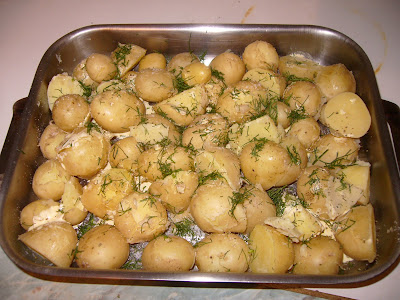 Wash the potatoes and cut into roughly 2 cm sq pieces.
- Place in a pan of cold water and boil for 20 minutes or until just beginning to go soft. Whilst this is happening preheat the oven to 220 C.
- Drain the potatoes and place in an oven tray. Spread the margarine over the hot potatoes so it covers them evenly.
- Then sprinkle the chopped dill over the potatoes and season with salt and pepper.
- Place the tray into the hot oven and bake for 15 minutes.
- The dish is ready for serving.

The dill potatoes make just as good meal when cold or can be reheated with a little more margarine.
![Reblog this post [with Zemanta]](http://img.zemanta.com/reblog_b.png?x-id=b559d952-b1ee-4c99-a81c-c2b1e74180bf)
Monday, 6 July 2009
Coriander - Grown But Not Eaten In Bulgaria

Coriander is a fantastic herb for its strong flavour and is produced as a major export food in Bulgaria. It is very rare indeed for Bulgarians who produce so much of it to use it in their National dishes – I really don’t know why?
This aside coriander or cilantro is an annual herb. It is native to south western Asia and west to North Africa. It looks a bit like parsley with its It is a soft, hairless leave growing up to 50 cm in height. The flowers form small umbels coloured white or light pink, asymmetrical, with the petals pointing away from the centre of the umbel longer (5-6 mm) than those pointing towards it (only 1-3 mm long). The seeds, another fantastic food ingredient is round and ranging from 3-5 mm in diameter.
Used sparingly in salads coriander leave ad a ‘zing’ to the taste. Many Asian dishes use coriander alongside many other herbs and spices. The herb is never overpowered in taste, even with the addition of chillies. The coriander seeds give an even stronger flavour and are often lightly dry roasted before being ground or crushed to bring out an even more intense flavour.
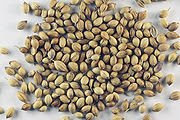 Coriander is easy to grow even in the UK if in a sunny sheltered position and of course in pots inside the house on a sunny window ledge would being good results. You can use the seeds from the supermarket or local Asian grocer to plant. You will find that if you do go to your local Asian grocer the leaves and the seeds will be much cheaper and fresher that supermarket produce.
I have introduced coriander to my Bulgarian family and friends in salads and other meat stew dishes, but although they like it, they will not use it and revert back to traditional ingredients where coriander is excluded. The only use they have in Bulgaria is to add coriander to the distilling of rakia – this is done most effectively and the resulting rakia takes on the flavour very successfully.
Elsewhere coriander seeds are used in other alcoholic beverages such as brewing certain styles of beer, particularly some Belgium.
Coriander has many uses in all types of food, but you must remember that always buy and store the seeds whole as ground coriander loses its flavour very quickly.
Used sparingly in salads coriander leave ad a ‘zing’ to the taste. Many Asian dishes use coriander alongside many other herbs and spices. The herb is never overpowered in taste, even with the addition of chillies. The coriander seeds give an even stronger flavour and are often lightly dry roasted before being ground or crushed to bring out an even more intense flavour.
 Coriander is easy to grow even in the UK if in a sunny sheltered position and of course in pots inside the house on a sunny window ledge would being good results. You can use the seeds from the supermarket or local Asian grocer to plant. You will find that if you do go to your local Asian grocer the leaves and the seeds will be much cheaper and fresher that supermarket produce.
I have introduced coriander to my Bulgarian family and friends in salads and other meat stew dishes, but although they like it, they will not use it and revert back to traditional ingredients where coriander is excluded. The only use they have in Bulgaria is to add coriander to the distilling of rakia – this is done most effectively and the resulting rakia takes on the flavour very successfully.
Elsewhere coriander seeds are used in other alcoholic beverages such as brewing certain styles of beer, particularly some Belgium.
Coriander has many uses in all types of food, but you must remember that always buy and store the seeds whole as ground coriander loses its flavour very quickly.
![Reblog this post [with Zemanta]](http://img.zemanta.com/reblog_b.png?x-id=2f26eb5c-6818-4af0-bcda-8dfcf341f084)
Tuesday, 9 June 2009
Pimpinella Anisum - Or Bettter Known As Anise
![Star [Anise] Burst](http://farm1.static.flickr.com/186/411038315_f4268d3f15_m.jpg)
Pimpinella anisum or its more common name anise grows in the warmer parts of the world. It probably originates from the Mediterranean area and is a grass-like herb that grows to 60 cm in height and blossoms with a 5 part cluster of white flowers between May and June.
The fruits are harvested in July and August just before full maturity to avoid the fruit dropping. The aniseed-flavoured fruit has distinctive odour and sweet taste. It is normally packaged in a hemp or chetirisloyni paper bags to prevent moisture seeping in. therefore should be stored in dry and ventilated areas.
the herb is used mainly for coughs and associated ailments such as inflammation of the bronchi, laryngitis and angina. Add to this a remedy for pains in the stomach and intestines, gastric mucosal inflammation, colic, flatulence, sand and stones kidneys and bladder problems. Lastly is is known to increase milk in breastfeeding.
 In Bulgarian folk medicine is used when thick, insomnia, headache, lack of regulation and painful menstruation, and other hiccups.
You can add 1 teaspoon beaten plodcheta and leave to soak for 1 hour in half a litre hot water, then drink 1 glass of this before meals 4 times a day. Or you can use essential oil with 1-2 drops that can be taken on a sugar lump.
I will be sure to keep an eye out for this in Bulgaria, sounds a pretty useful herb to have n stock although I don’t think it would survive a cold winter here is grown, but maybe as an annual is the raw seeds can be sourced. Being grass like probably would lend itself to being grown in containers to restrict root invasion then perhaps could be sheltered during winter.
the herb is used mainly for coughs and associated ailments such as inflammation of the bronchi, laryngitis and angina. Add to this a remedy for pains in the stomach and intestines, gastric mucosal inflammation, colic, flatulence, sand and stones kidneys and bladder problems. Lastly is is known to increase milk in breastfeeding.
In Bulgarian folk medicine is used when thick, insomnia, headache, lack of regulation and painful menstruation, and other hiccups.You can add 1 teaspoon beaten plodcheta and leave to soak for 1 hour in half a litre hot water, then drink 1 glass of this before meals 4 times a day. Or you can use essential oil with 1-2 drops that can be taken on a sugar lump.
I will be sure to keep an eye out for this in Bulgaria, sounds a pretty useful herb to have n stock although I don’t think it would survive a cold winter here is grown, but maybe as an annual is the raw seeds can be sourced. Being grass like probably would lend itself to being grown in containers to restrict root invasion then perhaps could be sheltered during winter.
![Reblog this post [with Zemanta]](http://img.zemanta.com/reblog_b.png?x-id=310c811c-91d7-4173-af06-55e52d1ede83)
Monday, 27 April 2009
Dill Or No Dill?
 Dill or no dill? This was a the question that came to me when moving to Bulgaria. It was no dill in the UK and dill when I got here. Dill is used extensively in Bulgarian dishes. There is no stopping me now once I discovered it and grow it both in the town and village location.
It will be now surprise that Dill comes originally from Eastern Europe (Bulgaria included.) There are also varieties in Mediterranean and in West Asia. Dill was even found in the tomb of the Ancient Egyptian Amenhotep II, late Neolithic lakeshore settlements in Switzerland and in Roman ruins in the UK.
The name dill probably came from Norse or Anglo-Saxon word 'dylle' that translates 'to soothe.' The ancient Greeks saw dill as a sign of prosperity and it was used in 8th banquets to cure hiccups. In the middle-ages saw dill as a erotic love potion and to keep evil witches away. American Puritans and Quakers gave dill seeds to their children to chew during long church meetings as it acted as a hunger-suppressant.
 Dill has fernlike leaves, which are aromatic. These are used and are used to flavour a variety of foods including soups and pickles where the flowers of the dill are often used. Dill is best when used fresh due to it loosing its flavour very quickly. Modern freeze-dried dill leaves preserve their flavour well and will last up tot six months.
The dill seed is used as a spice, with a flavour somewhat similar to caraway, but also resembling that of fresh or dried dill weed. Dill oil can be extracted from the leaves, stems and seeds of the plant. The seeds were traditionally used to soothe the stomach after meals.
Growing dill Successfully requires warm to hot summers with high sunshine levels; perfect in Bulgaria. Partial shade will reduce crop quality substantially. Dill likes rich, well-drained soil.
The seeds are gathered by cutting off the flower heads, as the seed is begins to ripen. The seed heads are placed upside down in a paper bag and left. The seeds then separate from the stems easily for storage in an airtight container. It is very easy to manage.
Dill is great is grow in containers. You can use normal potting compost and keep the plants well watered. You can easily grow dill indoors, just sow the seeds October in small pots then transplant them to larger pots when the plants are about over 15 cm in height. A sunny windowsill is an ideal place for them to grow on although you might need a stake to support them eventually The crop will be ready for harvest about tow months after sowing.
This Dill Sauce recipe was tried and tested from the BBC and was found to be superb especially served with fish dishes.
Dill Sauce Recipe
Ingredients:
15g/½oz sugar
200ml/7fl oz red wine vinegar
80g/3oz Dijon mustard
400ml/14½fl oz olive oil
salt and freshly ground black pepper
2 large tbsp fresh dill, chopped
 Method:
1. Whisk the sugar, vinegar and mustard together in a bowl.
2. Slowly whisk in the oil until smooth and thickened.
3. Season, to taste, with salt and freshly ground black pepper and add the dill.
Recipe from www.bbc.co.uk/
![Reblog this post [with Zemanta]](http://img.zemanta.com/reblog_b.png?x-id=cb21ceb7-a29c-446f-8a11-83474f202b7d)
Subscribe to:
Posts (Atom)