

Clixsense

Showing posts with label parsley. Show all posts

Monday, 6 July 2009

Coriander - Grown But Not Eaten In Bulgaria

Coriander - Grown But Not Eaten In Bulgaria

Coriander is a fantastic herb for its strong flavour and is produced as a major export food in Bulgaria. It is very rare indeed for Bulgarians who produce so much of it to use it in their National dishes – I really don’t know why?

This aside coriander or cilantro is an annual herb. It is native to south western Asia and west to North Africa. It looks a bit like parsley with its It is a soft, hairless leave growing up to 50 cm in height. The flowers form small umbels coloured white or light pink, asymmetrical, with the petals pointing away from the centre of the umbel longer (5-6 mm) than those pointing towards it (only 1-3 mm long). The seeds, another fantastic food ingredient is round and ranging from 3-5 mm in diameter.

Used sparingly in salads coriander leave ad a ‘zing’ to the taste. Many Asian dishes use coriander alongside many other herbs and spices. The herb is never overpowered in taste, even with the addition of chillies. The coriander seeds give an even stronger flavour and are often lightly dry roasted before being ground or crushed to bring out an even more intense flavour.
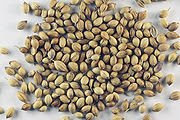
Coriander - Grown But Not Eaten In BulgariaCoriander is easy to grow even in the UK if in a sunny sheltered position and of course in pots inside the house on a sunny window ledge would being good results. You can use the seeds from the supermarket or local Asian grocer to plant. You will find that if you do go to your local Asian grocer the leaves and the seeds will be much cheaper and fresher that supermarket produce.

I have introduced coriander to my Bulgarian family and friends in salads and other meat stew dishes, but although they like it, they will not use it and revert back to traditional ingredients where coriander is excluded. The only use they have in Bulgaria is to add coriander to the distilling of rakia – this is done most effectively and the resulting rakia takes on the flavour very successfully.

Elsewhere coriander seeds are used in other alcoholic beverages such as brewing certain styles of beer, particularly some Belgium.

Coriander has many uses in all types of food, but you must remember that always buy and store the seeds whole as ground coriander loses its flavour very quickly.


Reblog this post [with Zemanta]

Tuesday, 23 December 2008

A Beautiful Beef and Herb Recipe

A Beautiful Beef and Herb RecipeThe flavours that some herbs give combined with other foods just are beyond description sometimes, especially is they are fresh and grown away from commercial enterprises. This recipe was taught to me from my father who was a professional Cordon Bleu Chef in one of the top London Hotels. He used to grow all his own herbs in our London garden and use those in his home cooking. These were memorable moments being brought up on these flavours, which I can still taste now. He used to get the meat from Smithfield market at 4:00 in the morning before London had woken up.

A Beautiful Beef and Herb RecipeRoasted beef fillet is one of the legends of the meat genre; it needs a little bit of fat on, as it isn’t natural for beef without fat. Unfortunately many food chain companies demand all the fat cut off, if this is the case and your only source of beef get some bacon fat to use with it instead.

This is a very simple recipe that only takes forty minutes from start to finish and the combination of the meat and herbs is something else.

Ingredients:

  • 2 kg fillet of beef with fat or bacon fat
  • Fresh rosemary
  • Fresh thyme
  • Fresh oregano
  • Fresh parsley
  • 3 cloves garlic, cut into thin slivers
  • Sea Salt and freshly ground black pepper

Method:

Turn the oven on and preheat to 220 Celsius. Once the string of the fillet has been untied stuff the rosemary, thyme, and oregano through and under the fat making sure it is pushed all the way around. The string can then be retied to seal the stuffing firmly in the package.

Using a sharp knife, pierce slits into the fat through to the flesh of the meat and place the slices of garlic in the cuts made. The salt and pepper can now be added to finish the dish for taste.

With the fat side up, put the meat parcel into a foil covered shallow roasting tray (I always use a foil to base trays to save on washing up!) It should just big enough to encompass the meat mass.

A Beautiful Beef and Herb RecipeAll it needs is an initial 10 minutes baking then turn the heat down to 175 Celsius and bake for a further 20 minutes for a rare finish or 30 minutes or longer for a medium finish. This dish shouldn’t be baked beyond this time otherwise it will turn tough.

Let the dish stand 15 minutes once out of the oven then slice. Discard the herbs and string and serve hot garnished with the fresh parsley. It can also be cooled to room temperature and then be put in the fridge for servings later on or the next day.

It should be enough to serve for up to 6 people.

Note:
Ideal in sandwiches by the way!

Wednesday, 24 September 2008

Havesting Herbs - Tips to Take

Apart from eating herbs the most rewarding facet is the harvesting of you home-grown produce. Picking a bunch of fresh herbs to use for cooking is a pleasure everyone can enjoy. With this there is a danger that when this is done, you don't ruin further growth and sustainability of the herb plant.

The secret is to use a little at a time. A few leaves added to a salad or a marinade is fine. Al that needs to be done is pinch the leaves off with your fingers. Don't tug and pull, the whole stem may well come off if you do. Apart from battering the herb plant it will leave enough leaves in place for the plant to continue growing unaffected and provide more produce later after a further period.

If the season is now at an end you may want to harvest the whole plant and preserve it use out of season. This is where the whole plant can either be dug up or cut down from the base of the main stem. This can then be prepared for freezing, dried or used as it is as an ingredient to other preserves such as vinegar or dressings.

Try to pick a dry day to harvest your herbs late morning onwards is good when all the morning moisture from the dew has evaporated. Make sure you harvest before the plants have flowered. The oil content in the herbs' leaves are at their peak just before flowering starts. Deadhead the flowers from the herb for it to keep producing as many leaves as possible.

Try to plan your harvest on the same day you intend to use them. This way there will be no lost of flavour or freshness.

You need a little patience to wait until the herb plants have fully developed into adult plants that will be robust enough to take a picking or two and recover with ease. And then you should never cut more than a third of the plant in one picking. The plant will need time to recover and regain its grow after this.

If you have no nails to pinch the leave off use a sharp pair of scissors and try to make sure it is done is a clean and clinical way.

Most herbs that are annual, such as basil and parsley should be topped off when harvesting. Only take leaves from the growing tips of the plants, the herb will then go on to produce more leaves and fewer flowers. In essence you are providing the herb with an extended life of production by doing this.

After harvesting, the herbs should be rinsed in clean cold water, which will give then the signal, just like rain does to keep their flavour and colour closed in.

Harvesting is one of the most enjoyable aspects of growing herbs. With this advice you should not spoilt or kill and crops you have taken the time and effort to grow.

Finally, make sure the children are part of the harvest help; this will ensure that there will be another generation who carry this wonderful pastime. A child’s memory of a harvest will be remembered for a lifetime.


http://site4truelove.com

http://bulgarianslivatree.com
http://365bulgarianadvetures.com
http://site4truelove.com
http://therakiasite.com
http://doshforu.com

Saturday, 26 July 2008

Grow Parsley - Use All Year Round

Parsley is one of the most used herbs in the garden but it is not always that easy to grow. I have tried growing it from seed many times but not very successful all the time.

It wasn't until I started looking up what you need to do to become more successful that I realised what I was doing wrong.

So my learning curve now brings in a bountiful of parsley throughout the year, freezing the crop to use i the winter. I now am never without probably one of the most popular herbs.

Parsley grows well in pots or in the ground. It take quite a while to germinate and you can get a good healthy and succulent crop by using a humus rich, moist and well fertilized soil.

Half sun and half shade is the best growing position, before I had always put it in a shaded part of the garden.

There are two main varieties the 'flat leaf' or 'curly leaf'. The flat leaf parsley is my favourite is sometimes also known as Continental parsley which in my opinion has more flavour.

You need to keep parsley well watered, never let it dry out but at the same time don't over water.

Another benefit I didn't know about was that you don't need to plant seeds every year as parsley is self-seeding. Just leave it once it has died down and next season you will have a fresh crop on its way up from the seeds drops naturally form the season before.

To use parsley all year round you need to freeze parsley. Just liquidise the leaves and stalks with a little water and put into an ice-cube tray. When frozen transfer the cubes of parsley into a plastic freezer bag. there yo have it parsley whenever you want it.

Growing and maintaining parsley is very easy, it is still a mystery to me why people buy this from shops when, even in a window box, fresh parsley can be grown in every home.


http://site4truelove.com

http://bulgarianslivatree.com
http://365bulgarianadvetures.com
http://site4truelove.com
http://therakiasite.com
http://doshforu.com

Total Pageviews