


Coriander is a fantastic herb for its strong flavour and is produced as a major export food in Bulgaria. It is very rare indeed for Bulgarians who produce so much of it to use it in their National dishes – I really don’t know why?
This aside coriander or cilantro is an annual herb. It is native to south western Asia and west to North Africa. It looks a bit like parsley with its It is a soft, hairless leave growing up to 50 cm in height. The flowers form small umbels coloured white or light pink, asymmetrical, with the petals pointing away from the centre of the umbel longer (5-6 mm) than those pointing towards it (only 1-3 mm long). The seeds, another fantastic food ingredient is round and ranging from 3-5 mm in diameter.
Used sparingly in salads coriander leave ad a ‘zing’ to the taste. Many Asian dishes use coriander alongside many other herbs and spices. The herb is never overpowered in taste, even with the addition of chillies. The coriander seeds give an even stronger flavour and are often lightly dry roasted before being ground or crushed to bring out an even more intense flavour.
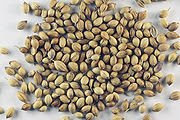 Coriander is easy to grow even in the UK if in a sunny sheltered position and of course in pots inside the house on a sunny window ledge would being good results. You can use the seeds from the supermarket or local Asian grocer to plant. You will find that if you do go to your local Asian grocer the leaves and the seeds will be much cheaper and fresher that supermarket produce.
I have introduced coriander to my Bulgarian family and friends in salads and other meat stew dishes, but although they like it, they will not use it and revert back to traditional ingredients where coriander is excluded. The only use they have in Bulgaria is to add coriander to the distilling of rakia – this is done most effectively and the resulting rakia takes on the flavour very successfully.
Elsewhere coriander seeds are used in other alcoholic beverages such as brewing certain styles of beer, particularly some Belgium.
Coriander has many uses in all types of food, but you must remember that always buy and store the seeds whole as ground coriander loses its flavour very quickly.
Used sparingly in salads coriander leave ad a ‘zing’ to the taste. Many Asian dishes use coriander alongside many other herbs and spices. The herb is never overpowered in taste, even with the addition of chillies. The coriander seeds give an even stronger flavour and are often lightly dry roasted before being ground or crushed to bring out an even more intense flavour.
 Coriander is easy to grow even in the UK if in a sunny sheltered position and of course in pots inside the house on a sunny window ledge would being good results. You can use the seeds from the supermarket or local Asian grocer to plant. You will find that if you do go to your local Asian grocer the leaves and the seeds will be much cheaper and fresher that supermarket produce.
I have introduced coriander to my Bulgarian family and friends in salads and other meat stew dishes, but although they like it, they will not use it and revert back to traditional ingredients where coriander is excluded. The only use they have in Bulgaria is to add coriander to the distilling of rakia – this is done most effectively and the resulting rakia takes on the flavour very successfully.
Elsewhere coriander seeds are used in other alcoholic beverages such as brewing certain styles of beer, particularly some Belgium.
Coriander has many uses in all types of food, but you must remember that always buy and store the seeds whole as ground coriander loses its flavour very quickly.


