Clixsense

Showing posts with label Alternative. Show all posts

Sunday, 11 April 2010

How To Get Rid Of Pain Naturally (Using Herbs)

Borage from Project Gutenberg EBook of Culinar...
In the past few years, the whole "all-natural" movement has been gaining ground as evidenced by aggressive marketing of alternative health products from weight-loss diet pills to cold medications all marked as "derived from nature." Of late, Western medicine is trying its best to join the alternative health bandwagon by researching on ancient herbal remedies that have been in use in more primitive cultures for centuries. This is also the reason for the sudden increase of natural pain relief medications.

Western medical science is still studying the host of ingredients and combinations that make up these natural pain relief, before any major investment is made by pharmaceutical companies, production-wise. There are a few "naturally made" medications already being sold on the market, but most of the traditional natural pain relief remedies have yet to be tested by neutral research laboratories. Most developed countries have employed strict standards regarding medical testing, and, as a consequence, has slowed down the release of herbal or natural pain relief medications.

However, in less developed countries, the natural pain relief remedies are still in frequent use and are, in fact, more popular than western medicine. This is particularly true outside of urban communities, where Western medical procedures and tools are either inaccessible or too expensive for the people. With the herbs and ingredients being readily available, and the people being aware of which plants work for what ailments, the process of using these natural pain relief methods is significantly simpler. While Western medicine recognizes this, there are several concerns that prevent the herbs and ingredients being used from being introduced to the mainstream.

Aside from the aforementioned testing procedures, developed countries have research being conducted to find out what exactly is making the natural healing methods work. This would allow pharmaceutical companies to both present the medication in the traditional capsule or pill form by isolating the key ingredient, but also by allowing them to study the effects and pinpoint other potential applications.

Another difficulty is the prevalent belief that herbal remedies or traditional medicines are somehow "inferior" or are fraudulent, as compared to Western medicines. While this view is archaic, this has been cited as one of the reasons why traditional Chinese medicines not being widely used outside of Chinese communities in the US. Supposedly, the extensive testing and study conducted by pharmaceutical companies on natural "pain killing" also involves the isolation of the working compound, which would allow them to market it as a "modern" drug.

It is also worth noting that some of these remedies may not be easily accessible to outsiders, making procuring samples difficult. With samples to test being so difficult to obtain, companies are rendered incapable of marketing the remedies, even if the chemistry behind the herbs is sound and effective. Another problem stems from the fact that most outsiders are incapable of understanding the cultural subtleties differentiating one herbal treatment from another.

Despite these difficulties, some pharmaceutical companies have managed to successfully field and market effective remedies based on folk treatments and herbs. There is an extant market for such remedies, and with massive advertising and media mileage, the market is expected to boom in no time at all.

Visit the Health And Nutrition Tips website to learn about what is psoriasis, flexural psoriasis, psoriasis symptoms, toe corn removal, foot corn removal , foot corn symptoms and other information.
Author: Harry Ayala

Reblog this post [with Zemanta]

Wednesday, 9 September 2009

Enhance Memory through Ayurvedic Herbs

Ginkgo biloba also known as Maidenhair Tree.Image via Wikipedia

The human brain is one of the most sophisticated organs nature has ever made. One of the most interesting aspects of the brain is its power to retain information, which we call as memory. Memory is perhaps the most vital of the aspects that differentiates human beings from other animals. However, memory can become faulty due to several reasons, and in that case the person is not able to make full use of his or her potentials.

Since ages, drugs and natural remedies have been prescribed to enhance memories in people. Ayurveda has a treasure-chest of such memory enhancing drugs, which are today popular all over the world due to their proven effective qualities. The following is a list of the most effective herbs used in memory enhancement all over the world.

1. Brahmi (Bacopa monnieri)

Brahmi is perhaps the most investigated of all herbs for its memory enhancement properties. Now it is certified that brahmi has several chemicals that promote the protein synthesis process in the nerve and the brain cells, which is directly responsible for developing the mental capacity of the brain. Brahmi can make a person think clearer, and hence the memory becomes more vivid. In India, brahmi is used in countless forms to improve mental capacity for school-going children. Brahmi also increases the grasping power of the brain, due to which people can understand and assimilate information easily.

In adults, brahmi helps in relaxing and soothing the cells of the brain, and brings it to a normal state of functioning. Thus, brahmi is a valuable anti-anxiety agent and an antidepressant. Brahmi oil is quite often used to massage the head. This sort of massage immediately puts the mind at rest and the mental abilities rise drastically after its use.

2. Ginkgo (Ginkgo biloba)

Ginkgo works by improving the blood circulation to the central nervous system. This is the primary requisite for a healthy and capable brain. Apart from this, ginkgo corrects any damage done to the cells of different parts of the body, including the brain. It also minimizes the effects of the blood clotting. All these properties of the ginkgo have been studied in detail by western experts and they have obtained very encouraging results.

Ginkgo has got a place of respect in Ayurveda. The extract of the ginkgo is prescribed to people who have amnesia and Alzheimer’s disease. Several herbal brain tonics have ginkgo as one of the chief ingredients.

3. Gotu Kola (Centella asiatica)

The gotu kola is very effective in increasing the circulation of blood to different parts of the body, including the brain. It protects the brain from damage due to the wear and tear of its cells. Gotu kola can regenerate lost energy from the human system, and make the person feel more zestful.

Gotu kola is generally used in tonics intended to re-vitalize the brain. It improves concentration, makes the brain more receptive to information and also brings about an enhancement in the memory.

4. Ashwagandha (Withania somnifera)

Ashwagandha is one of the most essential components used in enhancing memory and overall brain functioning. Ashwagandha is an adaptogen, stress-buster and a re-vitalizer. Ashwagandha has a cooling and calming effect on the brain. After a hard day’s work, ashwagandha can bring the brain back to its normal state of functioning.

Ayurveda regards ashwagandha as a medha rasayana, i.e. a brain tonic. It has direct results in improving the memory capacity of the brain. Ashwagandha is very powerful in making new concepts seem clearer and easy to understand. It is a vital component of almost all herbal brain tonics available in the market.

5. Mulethi (Glycyrrhiza glabra)

Mulethi is none other than licorice, the herb already known worldwide for its various curative properties. Mulethi is an efficient brain tonic and a re-vitalizer for the brain. Like most of the other herbs mentioned here, mulethi also rejuvenates the brain. In times of stress, mulethi can stimulate mental functions so as to feel a calming and relaxing effect. Mulethi increases the circulation into the central nervous system and balances the sugar levels in the blood. Mulethi is frequently provided to students who are preparing for important examinations, as it helps to remember small facts and bits of information.

6. Vacha (Acorus calamus)

Vacha is a very vigorous brain tonic, because it shows results in a very short time. It increases the overall memory of the person and strengthens the nervous system. Vacha is prescribed to people who have amnesia.

Improving the memory is a quest on which human beings have embarked centuries ago. In almost all civilizations, there have been attempts to discover the best herbs for brain enhancement with minimum side-effects. Perhaps, Ayurveda wins the race in this. All the herbs Ayurveda uses for its brain tonics have minimum side-effects and are quite safe for the human beings. Western science is now warming up to these herbs and is looking upon them as effective supplements for the human brain.

Read more about Natural Home Remedies at http://www.ayurvediccure.com - World's Finest Portal on Ayurveda and Herbal Remedies


Reblog this post [with Zemanta]

Monday, 31 August 2009

A Great Natural Medicine Site Found

A Great Natural Medicine Site FoundHerbs are natural source of medicine and the field of knowledge in this genre is endless. In some people’s eyes they wouldn’t use anything else other then herbs for remedies and cures, but where do you get advice on this massive subject? Where can you get feedback form people who have used herbs as medicine and have experience on the methods and effect they have had?

I have found a great site that is basically dedicated to herb talk and natural medicines. With a health forum which is a Google PR5 which proves it’s popularity and other sections on nutrition and recipes based on natural herbs and other foods there is a wealth of sections that can be clicked into for advice from others who have the same interest. The site has a wide and active audience and many of the topics will have very useful information on many sources of medicine that people can openly talk about. It is a site where you can register for free and it is quick and easy, then you can ask questions you may have or answer questions given by other members.

I just thought it would be a useful resource for many people reading my blog.
Reblog this post [with Zemanta]

Tuesday, 25 August 2009

Herbs to Increase Energy

Astragalus membranaceusImage via Wikipedia

The body’s ability to produce and utilize energy properly depends on many factors. Biochemically, energy is produced within the mitochondria of body cells as part of a complex process, where glucose from food is converted to adenosine triphosphate (ATP).

Certain herbs can activate and economize energy production and utilization. Herbs with this ability are known as ‘adaptogens’. Adaptogens increase the body’s ‘adaptive energy’, which economizes biochemical and physiological responses to ‘stress’ (physical, chemical and biological) and increases disease resistance.

The concept of ‘adaptive energy’, traditionally called ‘vital force’, has its equivalent in Chinese medicine, namely Qi (pronounced ‘chee’). Theory states that adequate production and utilization of Qi is underpinned by the body’s genetic or inherited energy, called Jing. Herbs that increase Qi are called Qi tonics and those that supplement Jing are called Kidney-meridian tonics.

The best known Qi tonics are Panax ginseng (Korean Ginseng) and Astragalus membranaceus (Astragalus). Both are defined in the West as adaptogens as well as immune modulators, cardiac tonics and antioxidants. In scientific trials, Korean Ginseng consistently demonstrates an ability to improve muscular strength, maximal oxygen uptake, work capacity, fuel homeostasis, serum lactate, heart rate, visual and auditory reaction times, alertness, and psychomotor skills. In layman terms, this equates with enhanced energy production and utilization resulting in increased physical performance.

Traditionally, Korean Ginseng is combined with Astragalus and modern research demonstrated that this combination has profound anti-fatigue effects, due in part to improved energy metabolism.

As indicated above, herbs with Kidney tonifying properties are essential to the success of any formula treating insufficient or deficient energy. The best known herbs for this purpose are Cordyceps sinensis, commonly called caterpillar mushroom and Withania somnifera or Ashwagandha.

Cordyceps is a highly valued medicinal mushroom in both Chinese medicine and modern clinical practice. Cordyceps helps increase stamina and endurance by enhancing mitochondrial energy production and is one of the top selling sports supplements amongst the worlds' elite competitive athletes.

Withania is also known as Indian Ginseng due to its many therapeutic similarities with Korean Ginseng. It is a highly respected adaptogen and Kidney-meridian tonic with anti-fatigue, anabolic, antiinflammatory, immune modulating, anti-anaemic, cognitive enhancing and aphrodisiac properties.

Three other herbs reinforce the energy enhancing effects of these principle ingredients. Interestingly, all three herbs are commonly known as Ginsengs. That is, Tienchi Ginseng (Panax notoginseng), American Ginseng (Panax pseudoginseng) and Siberian Ginseng (Eleutherococcus senticosis).

Siberian Ginseng rose to fame in 1984 after publication of a study into its effects on Soviet Olympic athletes during challenging training and competition. Athletes using Siberian Ginseng were found to have improved stamina and recovery, increased oxygen uptake and better performance.

By helping economize the body’s energy production and utilization, this combination of herbs can provide balanced support, whatever your level of physical activity.


Author: PaulKeogh
Paul Keogh ND, DMH is a qualified Naturopath and medical herbalist with 20 years combined experience in clinical practice and the development of medicinal-grade, integrated Chinese and western herbal medicines. Paul regularly reviews the benefits of vitamins, supplements and vitamin tablets for different goals and conditions.


Reblog this post [with Zemanta]

Sunday, 24 May 2009

Bulgarian Homemade Witch Hazel Deodorant

Witch Hazel Squared

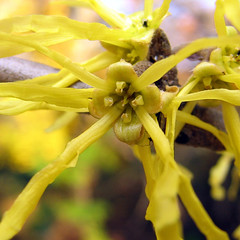
Witch hazel makes a great deodorant and because of its natural skin-healing and skin-care properties is an ideal replacement for commercial deodorants.

This DIY recipe for witch hazel based deodorant was given to me by a friend who works in a perfume shop and of course using locally produced Rakia with a high alcohol content, the higher the better. You can use vodka if you can’t get hold of Rakia. Here is a Bulgarian homemade recipe you may want to try. It makes 100 ml of deodorant.

You need to get a range of essential oils, which can be easily bought from good health shops or online stores. When you buy stocks they last for years so it is a good investment and of course many of the oils have therapeutic benefits in their own right.

Ingredients:

  • 1 tsp 50% (or more) proof rakia
  • 10 drops geranium oil
  • 10 drops cypress oil
  • 10 drops rosemary oil
  • 5 drops neroli oil
  • 5 drops lavender oil
  • 40 ml witch hazel
  • 25 ml rose water
  • 25 ml cornflower water

Method:
  1. You need a 100 ml bottle (glass) with a spray attachment to store the deodorant
  2. Put the Rakia in the bottle and add the oil one at a time.
  3. Give it a good shake so all the oils and alcohol have been thoroughly mixed.
  4. The witch hazel should be added into the bottle then the rose and cornflower flower waters.
  5. Mix well by shaking the bottle.
  6. The deodorant is now prepared and ready for application.
  7. You need to shake the deodorant before you apply it each time.

You will feel fresh all day and know that it is doing your skin a world of good.

Image by urtica via Flickr


Reblog this post [with Zemanta]

Wednesday, 18 March 2009

Herbs and Witch Doctors

{{Potd/2008-02-08 (en)}}

Herbal history shows evidence that medicine men, also know as witch doctors were responsible for health of their tribes. They gathered herbs and even went about performing minor surgical treatment to patients. their job was to provide medical advice and give treatments that was tied up with supernatural elements. They used charms, spells to ward off evil spirits.

The most well-known medicine men and witch doctors are from the American Native Indian societies, mainly because of the American film industry and westerns, therefore research would have been made for this. Medicine men perform ceremonies over the patient with family and friends in attendance. Herbal and other components that are called magic formulas are used along with prayers and a constant rhythm through drumming.

There was an overriding belief that these medicine men were able to contact the gods and with the aid of herbs and supernatural powers the patient would be cured, effectively ridding them of the evil spirits. They had an escape clause though. It the ceremony didn't work it was explained that the evil powers were too strong. A medicine man would have great respect, just like doctor of today in the community. However medicine men would not have had any formal training in medicine and procedures that were learnt were passed down by word of mouth.

Although many herbs would have been used and many would have worked in their own circles, the procedures were more of a psychological practice. We used many of these herbs in the same way today with our scientific knowledge base behind it and leave the psychology to the psychologists. The science has taken away the respect for the medicine men many years ago. The pillar of their society and glamour of their practices has faded, but they have left a legacy of herbal practices that do go on.
Reblog this post [with Zemanta]

Total Pageviews